


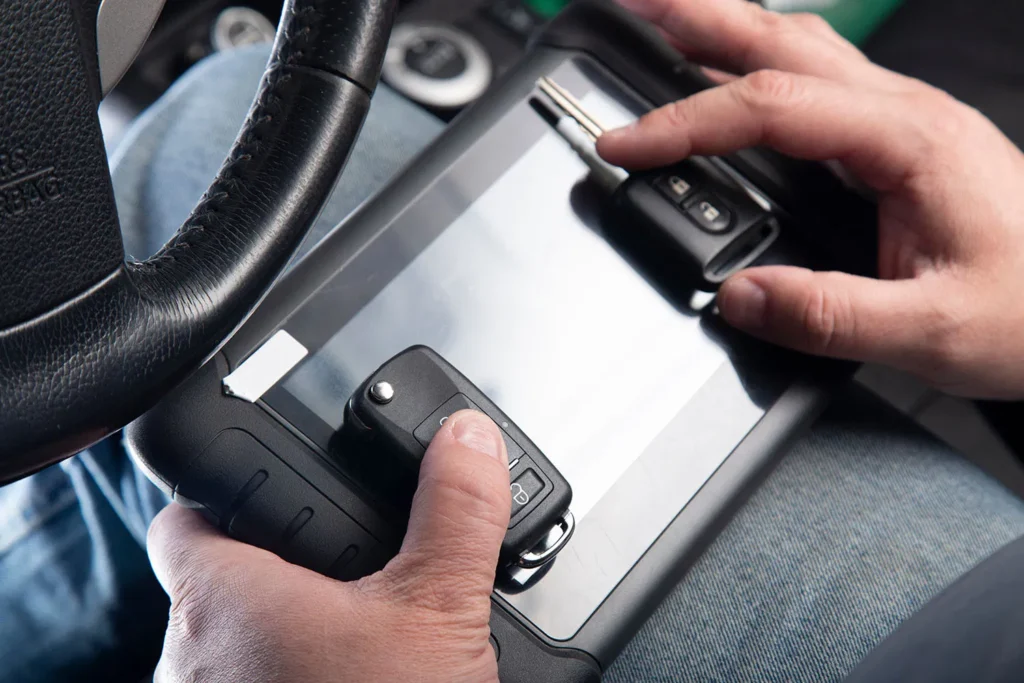
You’ve bought a second-hand car, collected the paperwork and driven it home, but there’s only one key. It’s a common situation, and car key programming for used cars can help you get a working spare before the only key is lost, damaged or locked inside the vehicle.
The important question is not just how to make another key. A missing key may still be registered to the car, which means it could still start the vehicle if someone else has it. Here’s what to check and how a spare can be added.
Why does a used car come with only one key?
There are several ordinary explanations. A previous owner may have lost the spare, never replaced it, or handed it in with another set of keys by mistake. Sometimes the car has been passed between owners and the second key simply disappeared along the way.
One key doesn’t automatically mean there’s a security problem. But unless someone has checked the vehicle’s authorised key memory, you may not know whether the missing key was removed from the system, or whether it can still start the car.
What does a missing key mean for your security?
On many modern vehicles, the immobiliser stores the electronic credentials of keys permitted to start the engine. If a missing key remains authorised, whoever has it may be able to start the car, even if you have the only key in your possession.
The exact security options differ by make, model and year. When arranging car key programming for used cars, ask whether the technician can check the stored keys and whether it’s possible to remove any keys you don’t have. Adding a spare and deleting a missing key are separate tasks; one does not necessarily happen automatically when the other is done.
If the missing key was simply misplaced, there may be little immediate cause for concern. If you suspect it was stolen or passed to someone who should no longer have access, mention that when you arrange the work and ask about deleting it from the immobiliser memory where the vehicle supports this.
For more on the risks around unauthorised access and modern vehicle security, see our guide to keyless car theft.
What to check when buying a used car with one key
If you haven’t completed the purchase, confirm exactly how many keys are included and get any promise of a second key recorded in writing. If you’ve already bought the car, it’s still worth checking the paperwork and contacting the seller to ask whether another key exists.
Test the key you’ve been given before relying on it. Check that it starts the car and try every button, including lock, unlock and boot release. On a keyless vehicle, check that the car recognises the fob and that the entry and starting functions work as expected.
Ask the seller:
- Were any keys replaced, and why?
- Is the key provided the only known working key?
- Was a key lost or stolen?
- Has the vehicle’s key memory been checked or reset?
- Is the key a complete working key, or only a cut blade or remote fob?
These questions help distinguish a complete, start-capable key from one that only opens a door or operates the remote. They can also help a locksmith understand the car’s key history before starting work.

Why car key programming for used cars is more than copying
A metal key blade can be cut to match the vehicle’s locks, but that alone may not let you start a modern car. Many keys contain a transponder: a small electronic chip that communicates with the immobiliser. The vehicle needs to recognise that chip before it allows the engine to start.
Remote locking and smart-key functions add further electronic steps. A replacement may need its remote buttons programmed, its transponder registered to the immobiliser, or its proximity functions paired with the vehicle. The precise requirements depend on the vehicle and the type of key.
That’s why car key programming for used cars is different from simply cutting a copy. The technician needs to identify the correct key type, cut the blade where required and use suitable equipment to register the new key with the vehicle.
Adding a key is different from an “all keys lost” job
Because you still have a working key, the work may be treated as adding a key. This is different from an all-keys-lost situation, where there is no working key available and the vehicle may need a more involved procedure to create and register a replacement.
The distinction matters when you book. Tell the locksmith that you have one working key and want a second, and ask whether the procedure for your vehicle requires all the keys you plan to keep to be present. Some programming procedures can affect the vehicle’s stored key list, so it’s better to confirm before work begins.
If you’re weighing up where to have it done, our comparison of a main dealer and an auto locksmith explains what to consider. For an overview of the factors that affect replacement-key costs, read our guide to replacement car keys.
How car key programming for used cars works on your driveway
For many vehicles, a mobile auto locksmith can complete the work at your home, workplace or another suitable location. The technician first confirms the vehicle details and the required key type, then uses specialist diagnostic and programming equipment to communicate with the vehicle’s electronic systems.
Depending on the car, the process may include cutting a blade, registering a transponder with the immobiliser and pairing the remote or smart-key functions. After programming, the new key should be checked for the functions it is intended to perform, including starting the car and operating its remote or proximity features.
A mobile appointment typically requires the vehicle to be accessible, the existing key and proof that you’re entitled to have work carried out on the car. Have the registration and, if available, the vehicle identification number (VIN) to hand. Before booking, confirm that the locksmith can work with your make, model and year, as equipment and procedures vary between vehicles.

Should you remove the missing key from the car’s memory?
If you don’t know where the missing key is, ask whether it can be deleted from the vehicle’s authorised key list. On supported vehicles, removing it means the car should no longer recognise it as an approved key for starting. The exact process and its effects vary, so the technician should explain what is possible for your model before proceeding.
Be clear about which keys you want to keep. Some procedures require the keys you still own to be present so they can be registered or confirmed during the work. A key that’s physically in your hand is not necessarily the same thing as a key confirmed in the vehicle’s current memory.
Common questions about car key programming for used cars
Will a new spare automatically cancel the missing key?
Not necessarily. Adding a key and deleting a key are separate operations on many vehicles, so ask for the key list to be checked and discuss deletion if you’re concerned about who may have the missing key.
Can I use a basic cut key as my spare?
Not always. A cut blade may open a mechanical lock, but a modern car may also require a programmed transponder or remote. Check that the replacement key is suitable for the functions you need.
Is having one working key better than having none?
Usually, it gives the technician a different starting point. With one working key available, the job may be an add-key procedure rather than an all-keys-lost procedure, although the exact process depends on the vehicle.
What information should I provide when I book?
Share the vehicle’s make, model, year and registration, and explain that you have one working key. Mention any known missing or stolen keys so the technician can check compatibility and discuss whether key deletion is available.
Arrange a no-obligation check
Getting a spare made is a practical step after buying a car with one key. It gives you a backup and an opportunity to ask whether a missing key may still be authorised. The right process depends on your vehicle, the type of key and the information available about its history.
MH Automotive provides mobile replacement-key services using dealer-level diagnostic and programming equipment, with more than 20 years of technical experience. Get in touch for a no-obligation check: we can discuss your vehicle and explain the options before you decide what to do.
